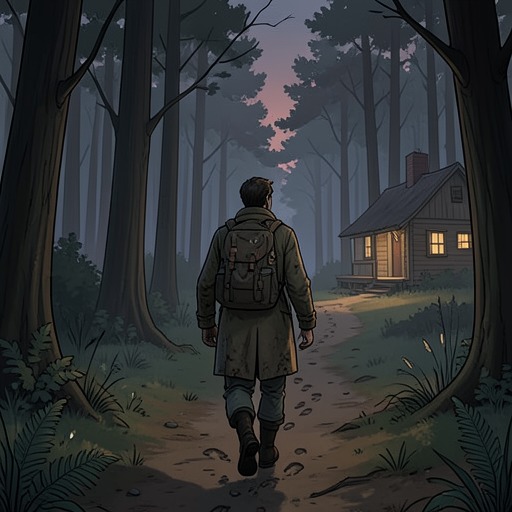
Ben Givens's suicide plan
East of the MountainsBen Givens’s suicide plan is an attempt to control the ending he expects from terminal cancer: he intends to die in the sage country after a quail hunt, making his death appear accidental or difficult to interpret. Its meticulous staging reflects a physician’s practical habits, but the plan is never simply a matter of logistics. As Ben prepares to leave, his concern for his family, his dogs, and a promise made to his late wife keeps breaking through the concealment and the conviction that death is preferable to pain.
Diagnosis and the reasoning behind the plan
Ben’s decision follows a diagnosis he believes offers no meaningful prospect of recovery. The cancer has spread from his colon to nearby lymph nodes and then to his liver. With a physician’s familiarity with disease, he considers the prognosis not as a remote possibility but as a course he can already imagine in detail. He expects escalating symptoms and dependency, including infection, fluid accumulation, vomiting, difficulty swallowing, pneumonia, and severe wasting. In his view, without an earlier death, the illness will end with him gasping in a nursing-home bed. He believes that only then would his doctor, Bill Ward, administer enough morphine to end his suffering.
The plan rests on fear of that anticipated suffering, not on an assumption that dying can be made painless or comprehensible. Ben has heard arguments that approaching death can sharpen attention to love, light, and the ordinary details of life, and that a gradual decline can allow time for reflection. But he doubts that such reassurances come from people who have confronted death as he has. His experience as a doctor has shown him pain so severe that argument cannot reach it. He rejects the idea that enduring pain is necessarily brave: to him, it may instead mean fearing the cessation of life more than suffering itself.
Before his diagnosis, Ben had maintained a professional distance from death. He concentrated on medicine’s tactical questions and had treated the deaths of patients as matters beyond his control, rather than allowing himself to feel haunted by them. That distance fails when the patient is himself. He knows medicine’s limits and believes nothing can stop his cancer; the very expertise that once helped him manage other people’s crises now gives shape to the future he wants to avoid.
Preparing a disappearance
Ben develops the plan as a trip that will look ordinary. He tells Renee and Chris that he is going over the mountains to hunt quail, without choosing particular canyons, and says he expects to return on Thursday, perhaps later if the hunting is good. By leaving the return date flexible, he expects his family not to begin searching immediately; he imagines they could go as long as a week before worrying that he has not come home. He keeps the cancer diagnosis from them because he fears adding it to their lives while they are still emerging from the grief of Rachel’s death.
His preparations give the departure the appearance of a carefully equipped, extended hunt. He packs hunting clothes and equipment, twenty-five number 8 shells, maps of Chelan and Douglas Counties, navigation and camping gear, a medical kit, and supplies for staying outdoors. He checks his water bottles and thermos for leaks, washes the breakfast dishes, and considers ordinary bodily discomforts that might accompany the drive. He also rearranges objects in the house to support the impression that he expects to return: a recipe card for quail on toast lies at an angle, the recipe box is left open, and a public-television program is set to record. He turns back a magazine Renee gave him and places it by his bed. The details are meant to make absence look temporary, not alarming.
The deception is particularly painful because the previous evening’s family visit has been an act of concealment. Ben eats with Renee and Chris and talks about ordinary concerns, including Chris’s medical-school clinics. He proposes that he and Chris climb Silver Peak after he returns, promising a future outing he does not expect to keep. As he makes arrangements at home, this lie troubles him more than some of the others. He nevertheless continues to maintain the appearance of an ordinary trip, leaving the house set up for his return and arranging for a neighbor to collect the mail and newspapers and take out the garbage.
The intended death and the obligations it cannot erase
Ben intends to finish the hunting trip in the sage country by killing himself and making the scene resemble an accident. He expects that Bill Ward may suspect suicide, but believes the evidence will not be conclusive and that the doctor will not want to raise the possibility without pressure from a coroner or insurer. Ben also expects the doctor to protect his medical privacy, including the fact of his cancer. The plan therefore depends not only on remoteness but on other people’s restraint and uncertainty.
Before leaving, Ben tests the feasibility of using his Winchester shotgun to kill himself. The rehearsal makes the possibility physically immediate, and its reality produces a surge of fear. He puts the gun down and returns to packing. That sequence exposes the gap between his deliberate intention and his emotional response: he has concluded that death is preferable to the illness he foresees, yet the prospect of carrying out the act frightens him.
The dogs are another responsibility his plan cannot resolve. Ben expects to release them in the sage country before dying, but he imagines them left to hunger, hardship, or death. He hopes they might survive and find another hunter, while also feeling that he owes them more than abandonment. The last meal he pictures for himself—a quail breast cooked over a fire—likewise becomes part of his thinking about what follows his death: it would sustain only the creatures feeding on his body. Even in planning his disappearance, he cannot think only of himself.
His thoughts also return to a promise made with Rachel on a train in Italy. They had imagined their ashes nourishing intertwined red and white roses. Ben has kept Rachel’s ashes in hope of fulfilling that shared wish, and now fears that his suicide will prevent it, leaving his own remains scattered across the sage country. The imagined roses and the imagined scattering offer opposing endings: one joins the couple’s remains in a continuing act of growth; the other dissolves Ben into an unmarked landscape.
Pain, fear, and the plan’s limits
The plan’s composure is repeatedly unsettled by Ben’s lived experience of illness. Later, in a motel, sharp pain in his side keeps him awake. He uses marijuana cigarettes given to him at a river crossing in search of relief, although he remembers the previous night’s confusion and worries about becoming mentally befuddled again. The episode places symptom relief beside his continuing determination to avoid the future he expects; it does not make his fear disappear. The drug’s effects leave him uncertain about what he is feeling and what his condition means.
Later still, while lying in a fruit pickers’ hut, Ben feels the chill of death and recognizes that exhaustion, nausea, and marijuana may cloud his perception. Beneath his outwardly stalwart manner, he has lived with a quiet, persistent fear of dying. The carabiner and piton against his chest recall equipment designed to hold a climber against a rock face, but they offer no answer to the finality he is considering. His plan is thus framed not as serenity before a settled decision, but as an effort to make an unbearable prospect manageable while fear remains.
The plan’s decisive significance lies in this tension between control and attachment. Ben arranges dates, equipment, household details, and an explanation for his absence with the same care he once brought to medical work. Yet the arrangements cannot erase the promises he makes to Chris, the duty he feels toward his dogs, his bond with Rachel, or his fear at the prospect of acting. The evidence follows the plan through its preparation and through Ben’s continuing confrontation with death; it does not establish its final outcome.